
Search Utah Police Records
Utah Police Records start with the agency that created the file, then move through state systems when you need a statewide history check, an expungement update, a court case file, or an older archive record. This guide brings the main official state resources together in one place so you can begin with the right office and keep your search focused. If you know the agency name, date range, or type of record, you can save time and avoid sending the same request to the wrong desk more than once.
Utah Police Records Quick Facts
Where Utah Police Records Start
The Utah Bureau of Criminal Identification is the state's central repository for criminal history records. That makes BCI the first stop when a search needs a statewide picture instead of one city or one county. The agency handles criminal history record checks, expungement services, fingerprinting, sex offender registration, and other identification functions tied to public safety. When you are trying to confirm whether a record exists at the state level, the BCI site tells you what the state keeps and how that information is organized.
The BCI criminal records page focuses the search a little more. It is the right place to start when you need a criminal history record, a fingerprint route, or a better sense of how the state handles records that were created by law enforcement and later stored in the central repository. That page helps separate a simple local report from a statewide record trail. It also makes clear that Utah Police Records are not all kept in one office, which is why the search usually works best when you begin with the right category of record.
The BCI homepage at bci.utah.gov is shown below because it anchors the state criminal records system and points you toward the correct public-safety office before you request copies or status updates.
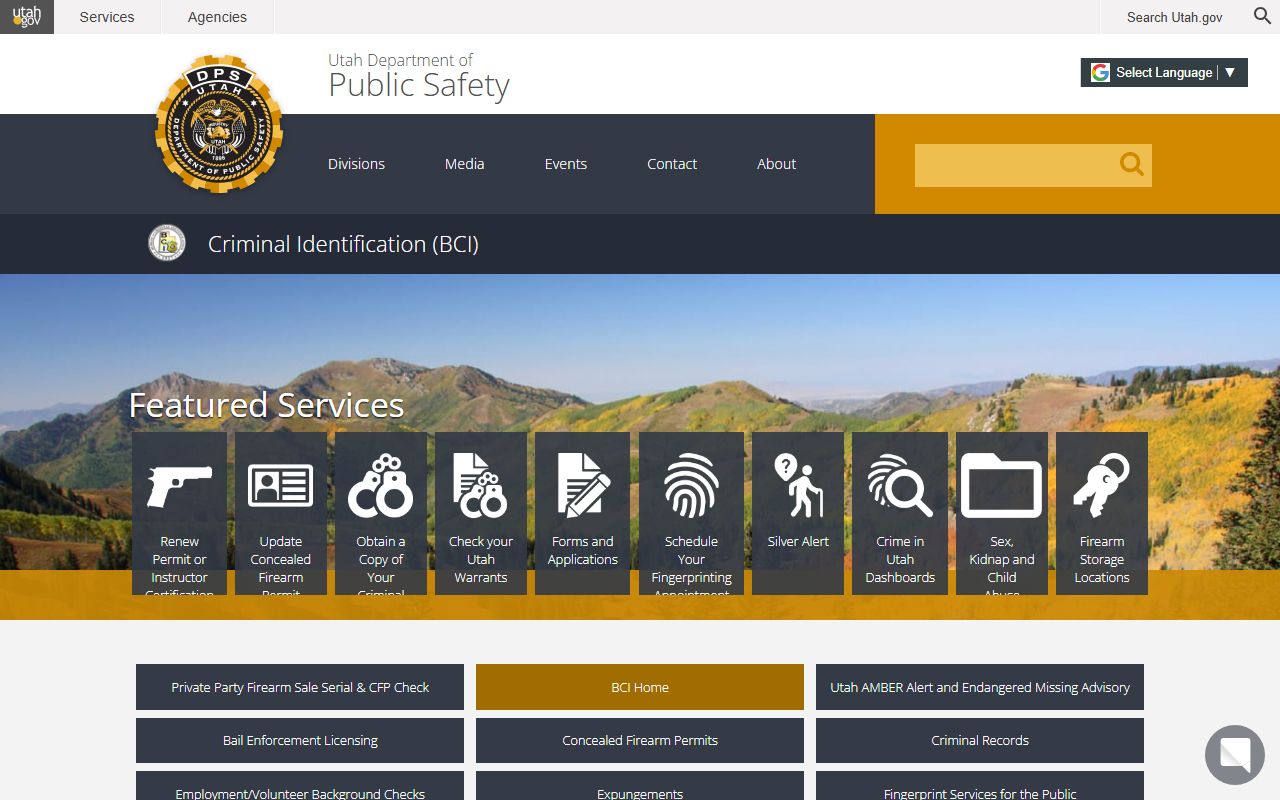
That state page is the cleanest starting point when you need to move from a local agency name to the statewide criminal history hub.
The BCI criminal records services page is shown next because it narrows the search to the record category most people are trying to reach. It helps when the file you want is not a case report from a sheriff's office, but a criminal history item stored by the state.
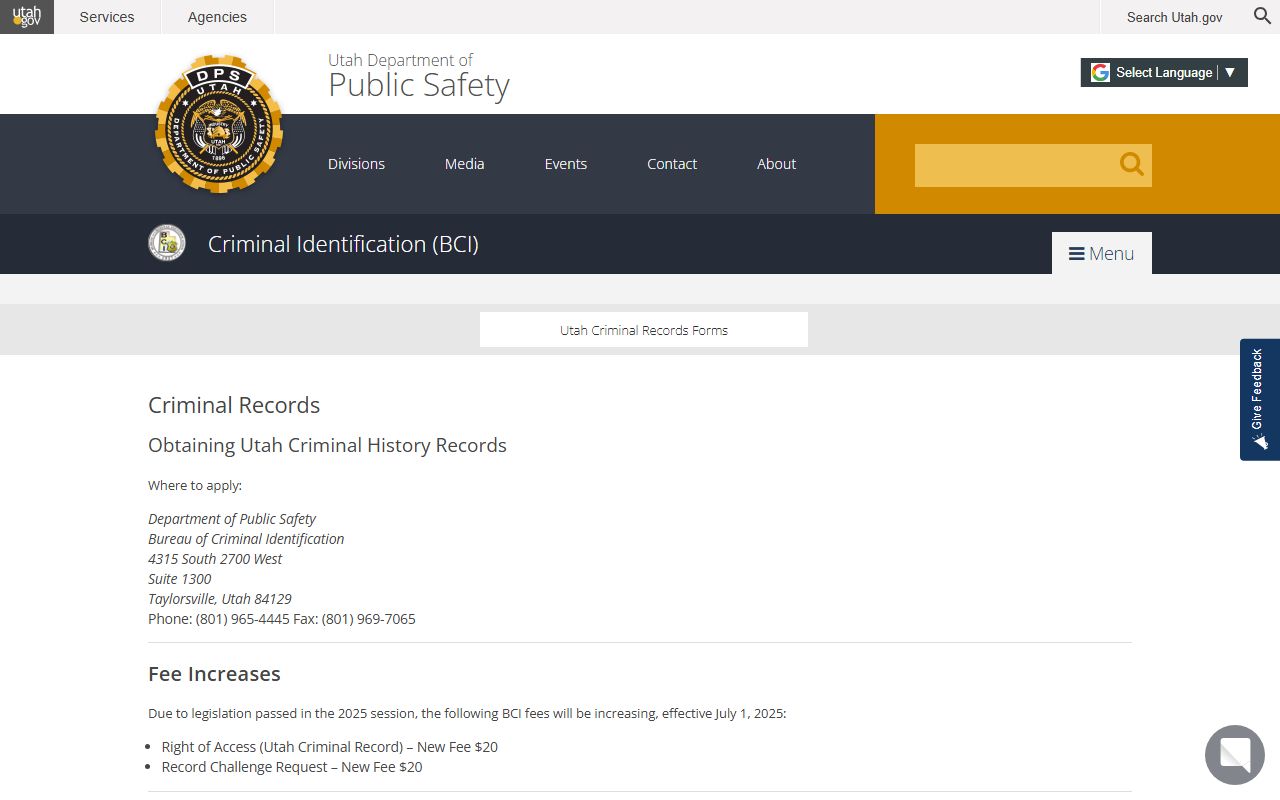
Use that page when the question is about a statewide criminal record, not just a single local incident report.
Utah Police Records and GRAMA
Utah's access law is the Government Records Access and Management Act, usually called GRAMA. It sets the basic rule for public access, but it also protects records that are private, protected, or controlled. That balance matters in police work. Some reports are open. Some are redacted. Some are withheld because the law says the release would harm privacy, safety, or an ongoing matter.
GRAMA also gives agencies a timeline. In many cases, a Utah government office has up to ten business days to respond to a standard request. If the request is expedited, the office may have to move faster. The request still needs to be clear. A good police-record request names the agency, the date or date range, the people involved if known, and the record type you want. The cleaner the request, the easier it is for the agency to find the right file and tell you what can be released.
The GRAMA law page at le.utah.gov/xcode/Title63G/Chapter2/63G-2.html is shown below because it explains the access rules that sit behind nearly every Utah police-record request, from incident reports to body-cam release decisions.
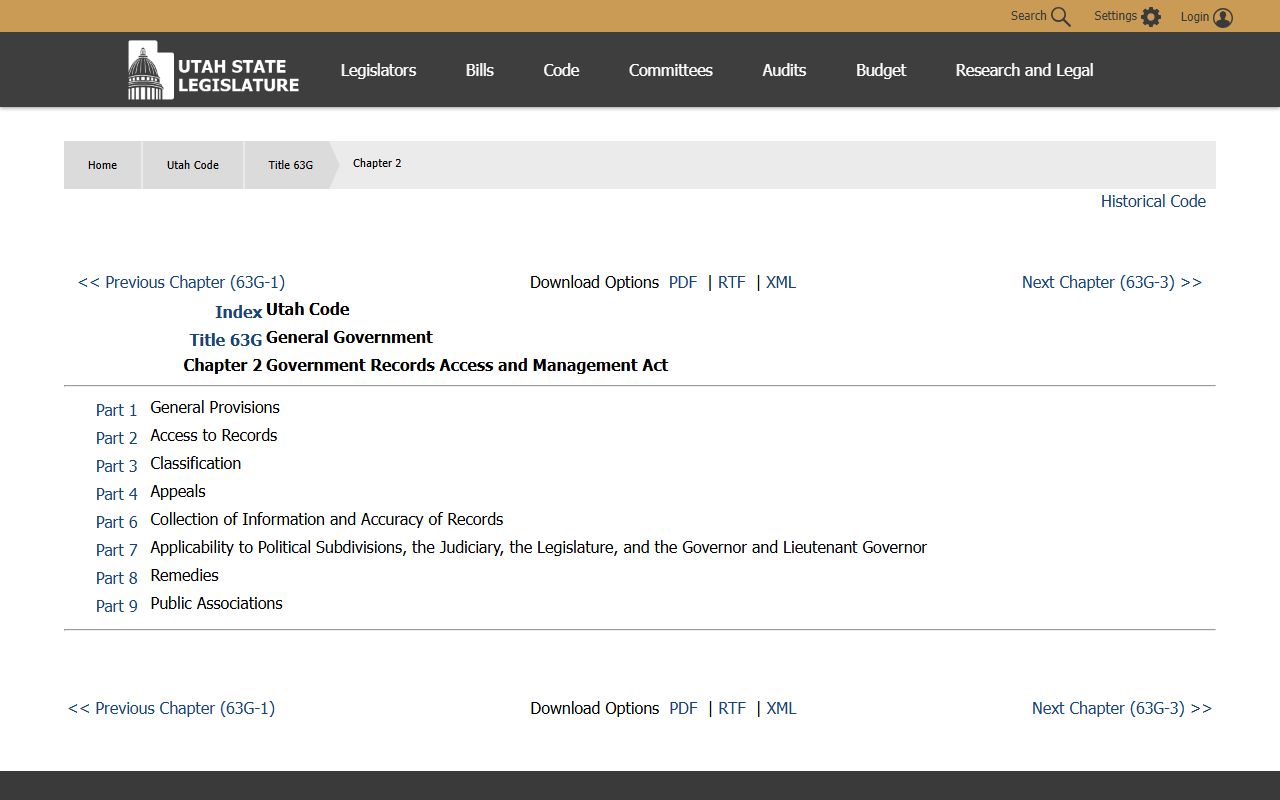
That law is the backbone for requests across county sheriff's offices, city police records units, and state agencies that hold public-safety files.
Utah Police Records in Courts and Archives
Police records do not always stay with the agency that created them. Once a case moves into court, the record trail may continue through the Utah Courts system. The court site is where you look for case tools, forms, and public case information after an arrest leads to a charge. That helps you connect the police report to the case that followed it, which is often the missing step when a search starts with a booking or incident record.
The Utah State Archives handles another part of the trail. Older court and government records often move into archival storage once they are no longer active at the front desk. The archives site is useful when you are looking for a historical file, a closed case, or a record that no longer sits in the current agency system. It also gives background on records that have been transferred out of the day-to-day office but are still part of Utah's public-record history.
The Utah Courts homepage is shown below because it is the main state doorway once a police matter becomes a court case and you need the public court file or case tools to continue the search.
That page matters when the police record is only the first step and the court file holds the rest of the story.
The Utah State Archives page is shown next because archived records are often the next stop for older police-related files, historic court records, and research questions that go beyond a current incident report.
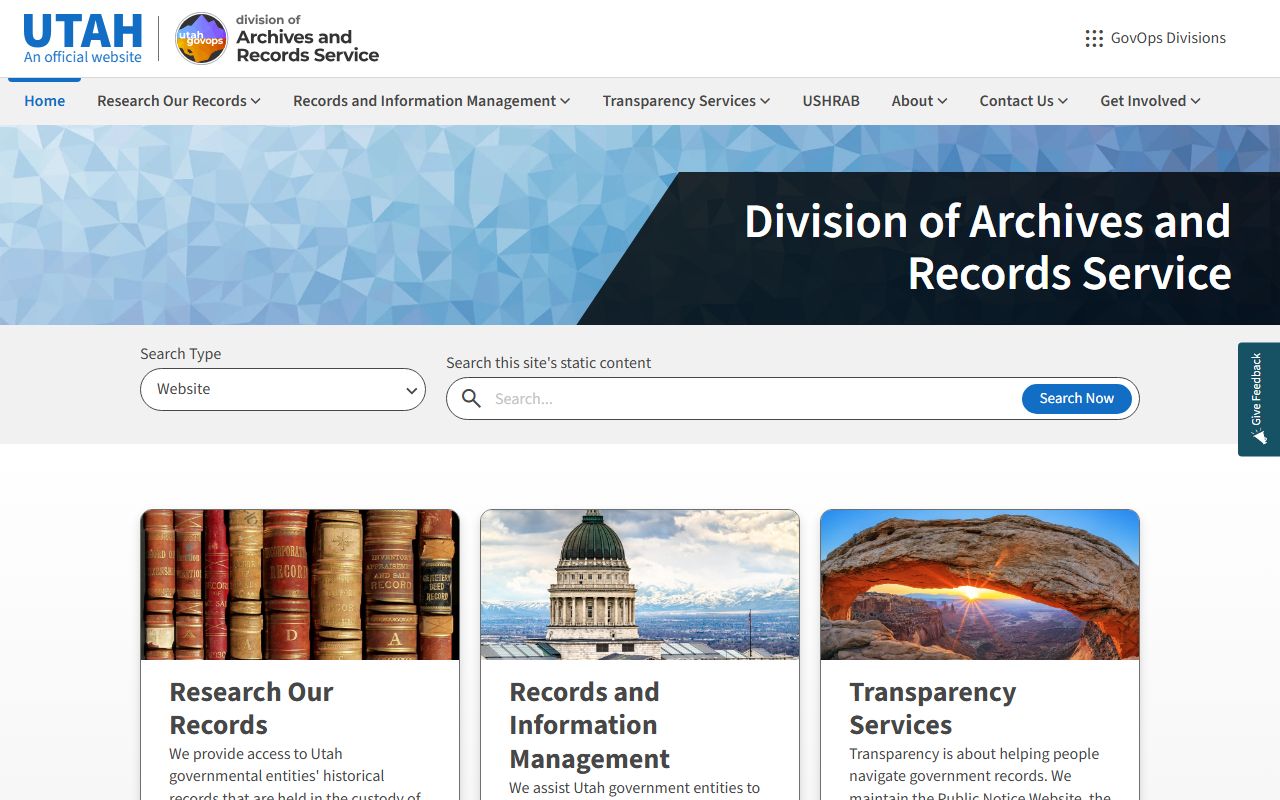
Use the archives when the record is no longer active but still needs a documented public-history path.
Utah Police Records, Expungements, and Status Checks
When a Utah criminal record has been expunged or is in the middle of that process, the best official source is the BCI expungements page. That page explains how Utah handles sealing and restricted access to criminal history records after a judge signs the order. It is the right place to look when a record search needs to account for an expunged arrest or conviction instead of assuming the file will still appear in a normal records search.
The same process has a status tool. The expungement status portal lets a person check where an expungement application stands using a submission or receipt number and date of birth. That is useful when a case is still moving and you need to know whether the request has been received, processed, or updated. Utah also treats some traffic expungements differently, so the court can be the correct starting point for those cases rather than BCI.
The BCI expungements page is shown below because it explains how Utah police records change after an expungement order reaches the state repository.
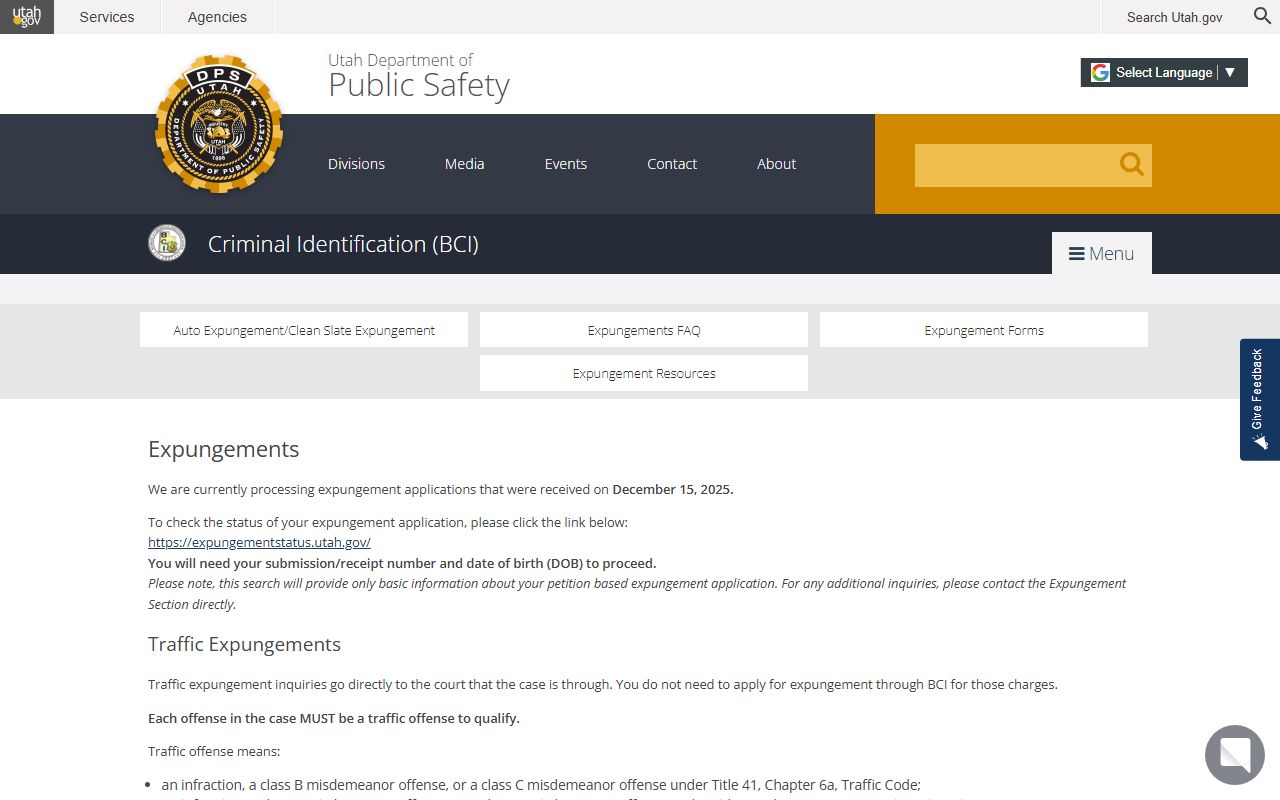
That page is a key follow-up when a record has already been sealed or is in process.
The expungement status portal is shown next because it gives a direct check on an active application and keeps you from guessing about the next step.
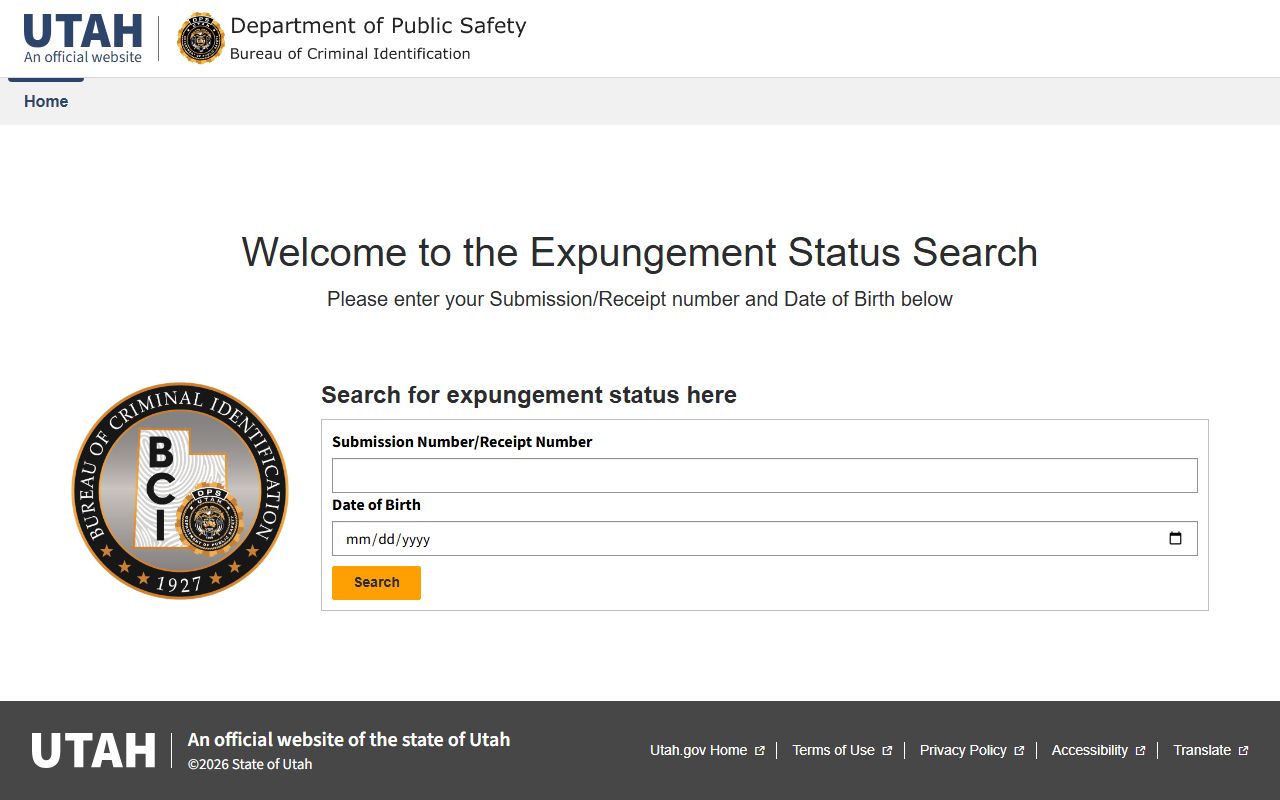
When a record has been expunged, the portal and the BCI page together explain how the state handles the updated file.
Utah Police Records and Highway Patrol Crash Reports
The Utah Highway Patrol is the state police agency most people reach when a crash, roadway stop, or interstate incident needs a public-safety record. UHP says crash reports can be requested through GRAMA after an investigation closes. That makes the Highway Patrol site important when a police-record search starts with a traffic event instead of a city or county arrest. If the incident involved a state road or a highway response, this is often the agency that controls the first copy of the report.
The UHP page also helps you understand where the state draws the line between a live investigation and a releasable crash file. That matters because a report that is not ready today may become public after the case is closed. If you are trying to track a wreck, a roadway arrest, or another traffic event, the Highway Patrol site gives you the official route instead of a third-party summary.
The Utah Highway Patrol homepage is shown below because it is the state route for crash-related police records and other highway safety information.
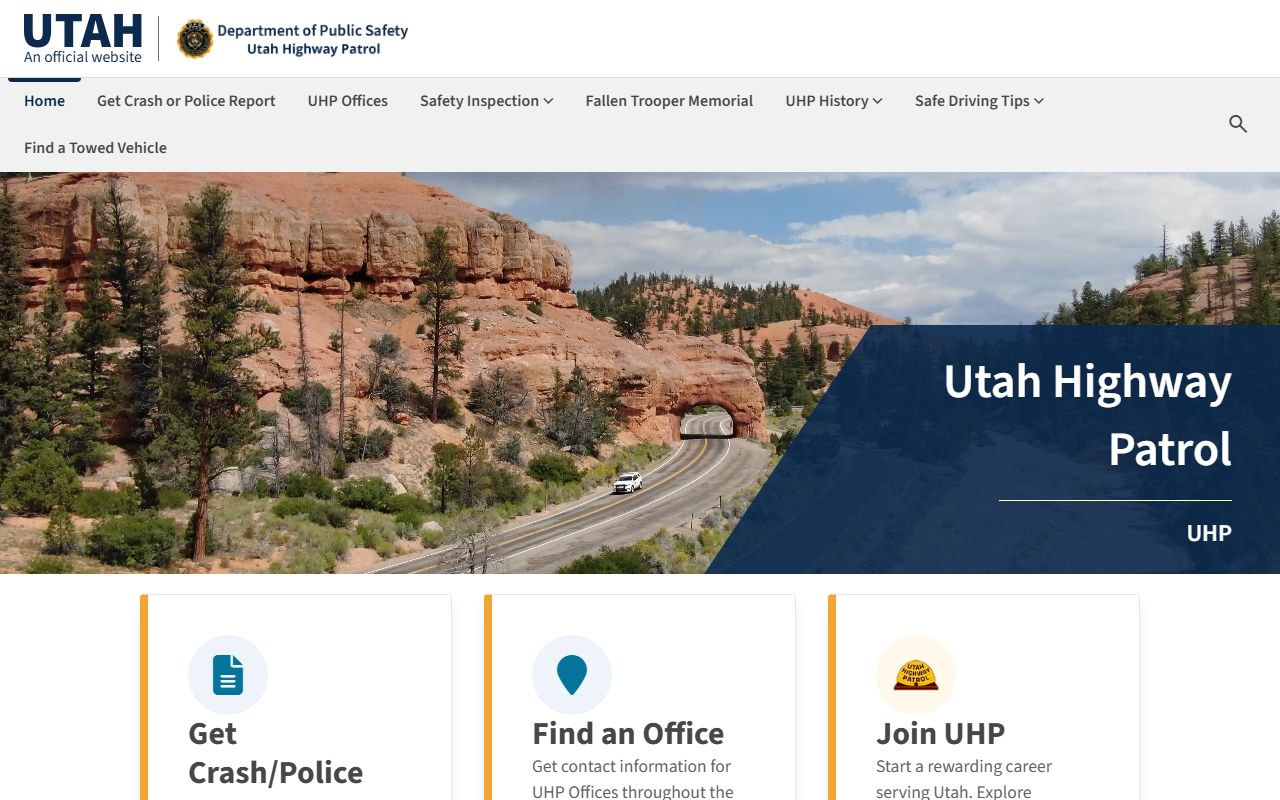
That page is especially useful when the report comes from a highway stop, a serious crash, or another state-road event.
Other Utah Police Records Tools
BCI also publishes a few public-safety tools that sit beside the core criminal history pages. They are not the main route for a local incident report, but they can matter when a search reaches a permit question or a firearm-transfer question. That is why these pages belong on the same statewide reference list. They help you stay with official Utah sources instead of wandering onto low-value search results.
The private party firearm sale checks page is shown below because it is one of the state tools that lives in the same public-safety space as criminal records, even though it is not the primary police-record search path.
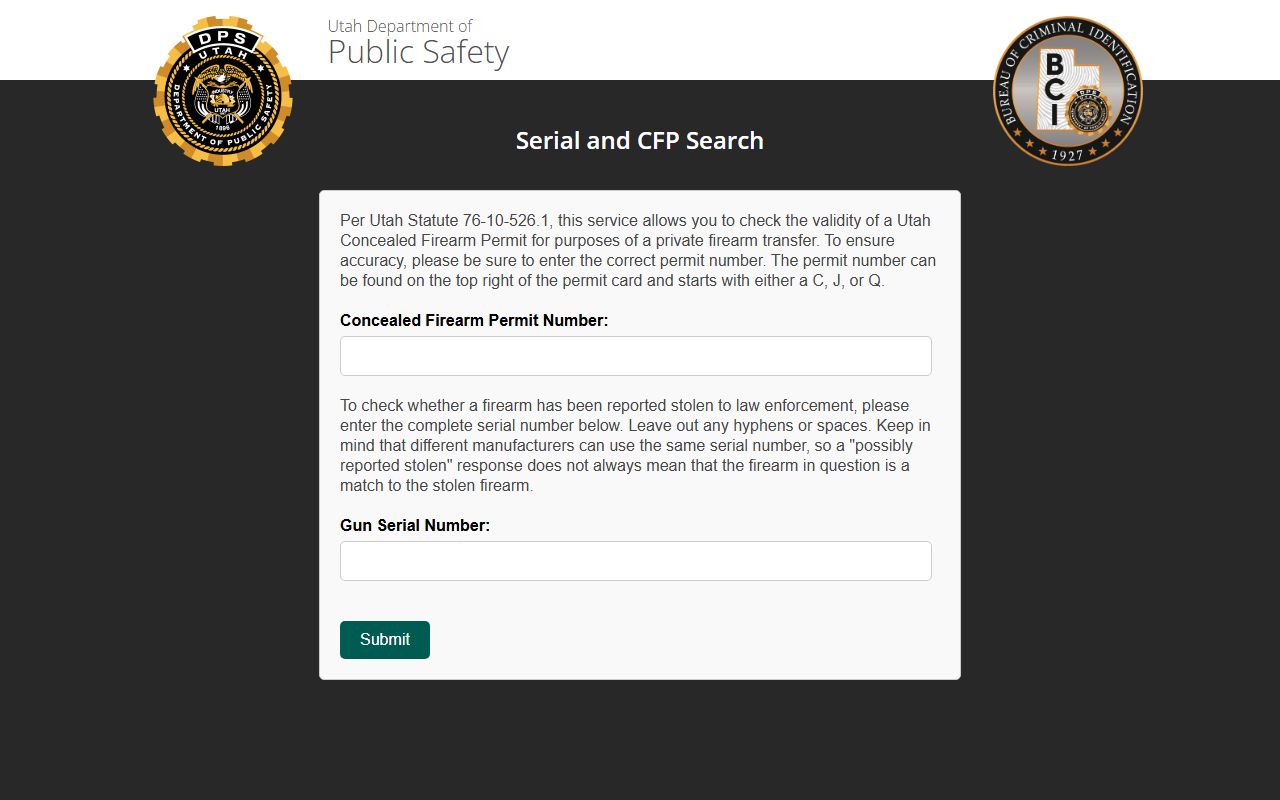
That tool is part of the broader BCI public-safety set, so it can help when your records question crosses into transfer checks rather than an incident file.
The concealed firearm permits page is shown next for the same reason. It is a state public-safety record resource, and it can help you understand how BCI organizes permit-related information alongside its criminal history work.
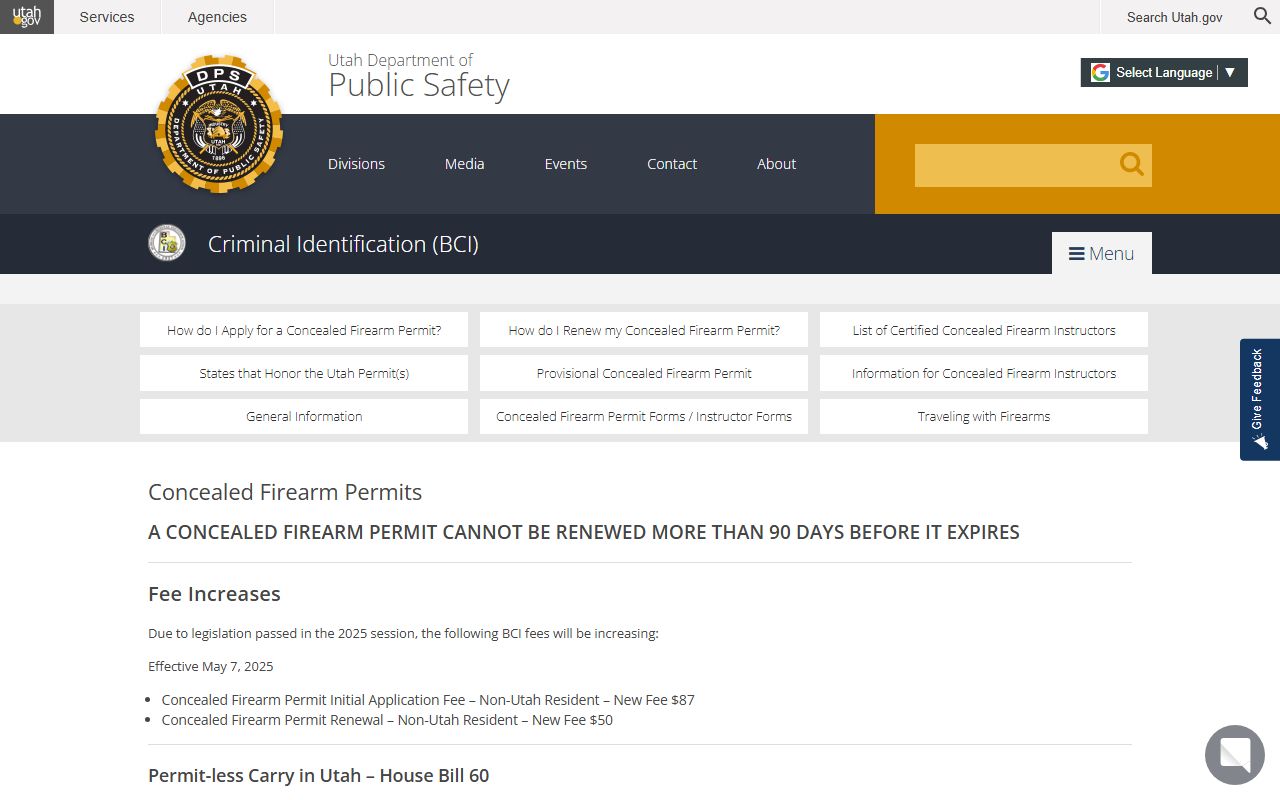
That page is not a substitute for a police report, but it does belong in a statewide records search when the question involves BCI rather than a county file.
Browse Utah Police Records by County
County sheriff's offices often hold the first copy of a police report. Pick a county below to reach a local police-record page.
Browse Utah Police Records by City
City police departments keep their own records when the incident happened inside city limits. Pick a city below to reach a local records page.