
Search Salt Lake County Police Records
Salt Lake County Police Records are spread across county, city, and regional agencies, so the best search starts with the office that actually created or keeps the file. In the county system, that may mean the Salt Lake County Sheriff's Office, the county records-management GRAMA portal, or a city police records unit in Salt Lake City or another local department. If you already know the date, the agency name, or the kind of report you need, you can usually move straight to the right desk. This page gathers the main routes in one place so you can ask once, follow the right path, and avoid a round of dead-end calls.
Salt Lake County Quick Facts
Salt Lake County Police Records Portal
The county records-management portal is the cleanest starting point when you need Salt Lake County Police Records. The county says requests go directly to the agency that maintains the records, which keeps the process from bouncing around between offices. The same portal also supports email progress notices, so you can see when a request moves, stalls, or needs more detail. That is useful in a county this large, where the record may be held by the sheriff, a city police department, or another agency tied to the event.
The Salt Lake County Sheriff's Office gives the broader public safety context. The office operates the Metro Jail and Oxbow Jail Facility and says the jails are designed to operate at low cost while reducing overcrowding and recidivism. Sheriff Rosie Rivera is listed through the office site. The sheriff office address is 3365 South 900 West, Salt Lake City, UT 84119, with phone (385) 468-9898, fax (385) 468-9904, and office hours Monday through Friday from 8:00 AM to 5:00 PM.
The Salt Lake County sheriff page is shown below so you can confirm the office, jail, and contact path before you send a records request.
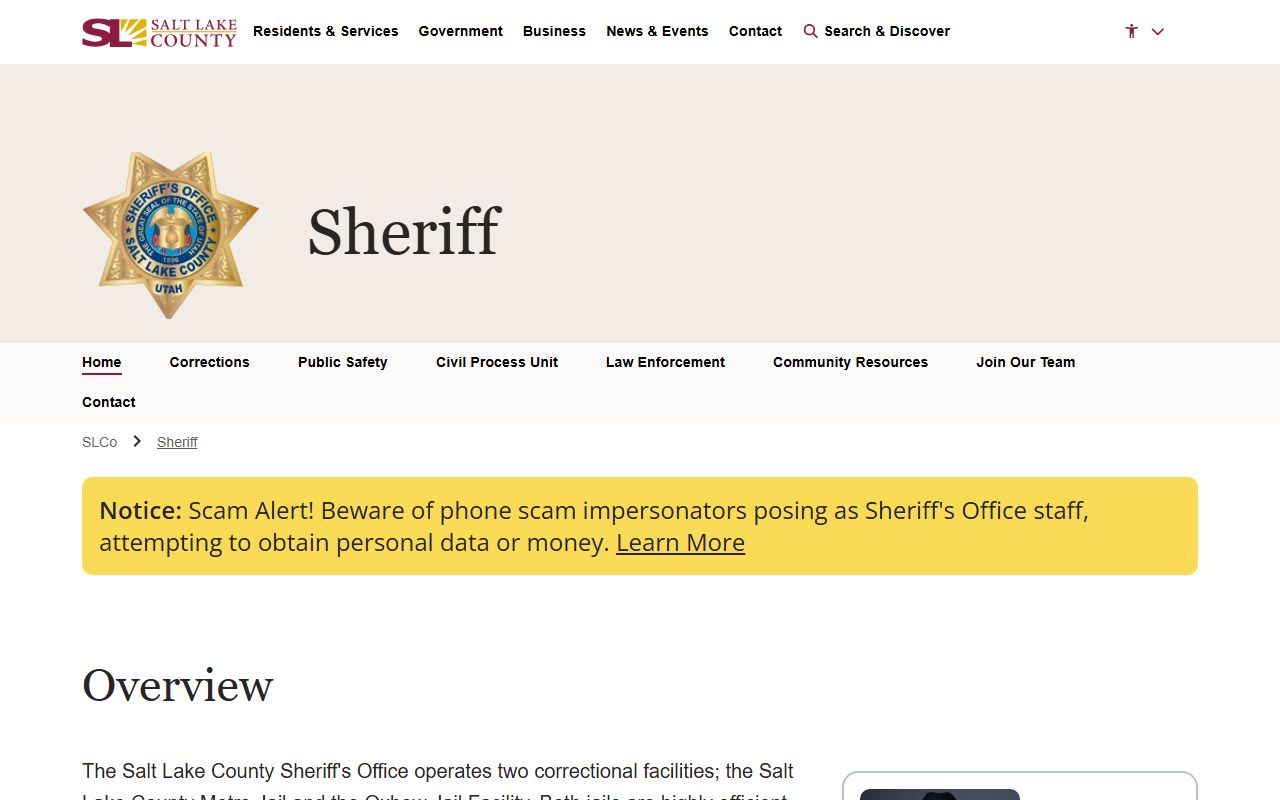
That office page helps anchor Salt Lake County Police Records because it shows the county's main jail and sheriff contact structure in one place.
| Sheriff Office |
Salt Lake County Sheriff's Office 3365 South 900 West Salt Lake City, UT 84119 |
|---|---|
| Office Phone | (385) 468-9898 |
| Jail Phone | (385) 468-8400 |
| Office Hours | Monday through Friday, 8:00 AM to 5:00 PM |
| County Portal | saltlakecounty.gov/records-management/public-records-requests-grama/ |
Salt Lake County Police Records Requests
Salt Lake County uses a public-records portal that accepts written requests by email, postal mail, or in person. The county says requests should be specific, because they are sent to the agency that maintains the records. That keeps the request narrow and makes the response easier to track. Standard requests are answered within 10 business days, and media requests can move in 5 business days. If the request needs a lot of files or extra assembly, the county can send an extension notice.
The county also allows a fee waiver request when the public interest is explained. Staff time is free for the first 30 minutes, then billed at $25 per hour. Copy fees cannot be more than $0.50 per page for paper copies, and certified copies are $10 or the statutory fee. If the county needs an advance payment because the estimate is above $50, it can ask for that before processing the file. Those details matter when you are asking for a long incident packet or a set of jail records.
For the county sheriff form, the requestor must supply a name, mailing address, daytime telephone, and a detailed description of the records requested. Photo ID is required before release, and the form allows you to choose inspection, copies, or a fee-waiver request with documentation. The form also shows the response categories, including the subject of the record, a request on behalf of a minor, public records, authorized access, or other documented authority. That structure helps keep Salt Lake County Police Records requests organized.
The Salt Lake County Sheriff's Office GRAMA form is shown below because it explains the county's release rules and the personal ID requirements in one place.
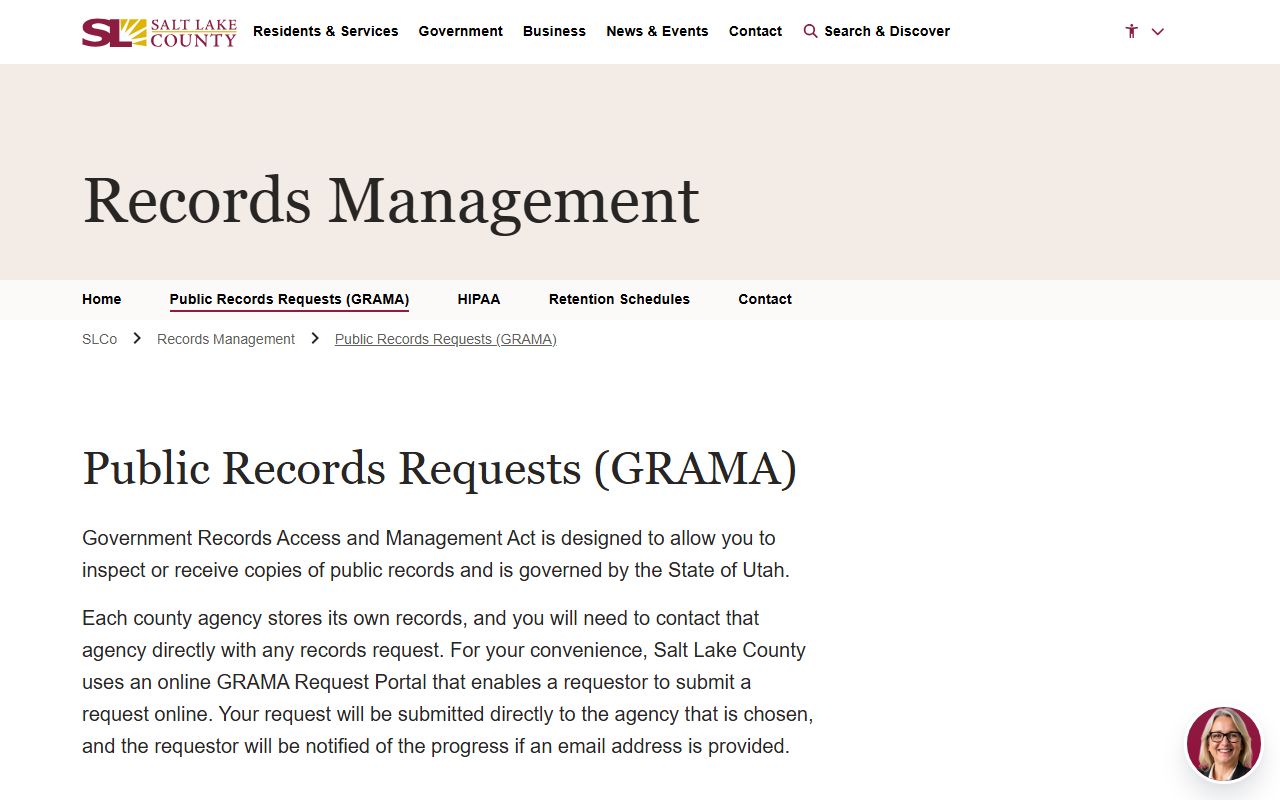
That form is the right county-level reference when you need the sheriff's records desk to release the public portion of a file or tell you what can be inspected.
Use these details when you prepare a request:
- Full name of the person or case
- Date or date range of the incident
- Agency name, if known
- Case or report number, if you have it
- Mailing address, phone, and email for the reply
Note: Salt Lake County Police Records requests move faster when the request is specific enough for the county to route it to the right agency on the first pass.
Salt Lake County Police Records from City Agencies
Not every Salt Lake County police record sits with the county sheriff. Salt Lake City Police has its own GRAMA records request page, and that matters when the report was generated by city officers instead of county deputies. The city page lists fees for police reports, traffic accident reports, photocopies, photographs, and body camera video. It also gives the public in-person request hours at the Public Safety Building on South 300 East and names Candee Allred as the GRAMA-media coordinator. If your record came from the city, use the city records route rather than the county portal.
Some records in the county are also handled by Unified Police Department. UPD says its records request process covers incident and traffic reports, uses a notary-signed form, and usually takes about 10 business days. Pick-up is by appointment only, and the form asks for the address of occurrence, date and time, and the names of the people involved. That is the right route for county areas covered by Unified Police, and it keeps you from asking the wrong records desk for a report it does not hold.
City and regional agencies often answer faster when the request matches the agency that created the file. Salt Lake City Police, for example, lists records such as chronological logs, initial contact reports, photographs, and traffic accident reports. The office also says mugshots are not published online and must be handled through a GRAMA request, which is a good reminder that the public route and the full file are not always the same thing. If you know the agency, start there. If you do not, the county portal can help you sort it out.
Salt Lake County Police Records can therefore move through three lanes at once: county GRAMA, Salt Lake City Police, and Unified Police. The key is knowing which agency actually wrote the record.
Salt Lake County Police Records and GRAMA Rules
Salt Lake County's sheriff GRAMA form is explicit about what can be inspected, what can be copied, and what has to be redacted. The form says public portions of records can be inspected free of charge during normal working hours. It also lists private identifiers that are subject to editing, including date of birth, Social Security number, driver's license number, home address, home phone, business phone, race, and ethnicity. That is normal under Utah GRAMA, and it helps explain why a file may come back with parts removed.
Utah's GRAMA law at Utah Code Title 63G, Chapter 2 is the legal backdrop for every Salt Lake County police record request. The county portal uses that law when it routes records to the right agency, and the sheriff form uses it when it decides what may be released. The county and the law work together. If the request is public, the county can release the public portion. If a part is private, protected, or otherwise restricted, the county can edit it before release.
That balance matters when you are trying to get a report fast. A request that names the agency, the date, and the record type gives the county a clean path. If you also know whether you need inspection or copies, the county can often answer with less back and forth. Salt Lake County Police Records are not hard to reach, but they do reward a careful request.
Note: The sheriff form requires notarization for some authorization paths, so it is worth checking whether you are requesting your own file, a minor's file, or a record you were authorized to receive.
Salt Lake County Courts And Archives
When a county arrest becomes a court case, the Utah Courts site becomes the next stop. The court system gives you access to case tools, calendars, forms, and public case information. That is where you follow the record after the sheriff or city police file has done its job. For Salt Lake County, that means the police record and the court file are related but not identical. The record starts with the agency. The case continues in court.
The Utah State Archives is the other useful follow-up. Older records often move out of active county files and into archival storage. That does not mean the record is gone. It means the county may no longer keep it at the front desk. If you are tracing an older Salt Lake County matter, the archive can tell you whether the file has moved and where to look next.
For Salt Lake County Police Records, the county, city, and archive searches belong together. They show different parts of the same history and help you move from a local report to the file that explains it.