
Find Utah County Police Records
Utah County Police Records are split across the sheriff's records division, the inmate search and corrections pages, the warrant department, and local city police when a case began inside a municipality. That makes the county a good place to start if you know the name, date, or agency tied to the event. The county keeps the sheriff contacts and inmate tools close together, so you can move from a quick status check to a formal records request without guessing which office owns the file. In a county this large, using the right source first saves a lot of time.
Utah County Quick Facts
Utah County Police Records Office
The Utah County Sheriff's Office Records Division is the main county source for Utah County Police Records. The office is at 3075 North Main Street in Spanish Fork, with phone (801) 851-4000. The inmate and records line is (801) 851-4250. That gives you a direct place to start when you need a custody answer, a booking note, or a formal request for a county record. Because the county is large, having the records and inmate lines close together is a real advantage.
The sheriff's corrections pages also matter because they show where an inmate search fits into the bigger record trail. The county keeps a corrections division and an online inmate search portal. That means a quick name search can often confirm custody status before you ever send a written request. If you only need the status, the portal may be enough. If you need the file, the records division is the next stop.
Utah County also has a warrant department with a direct phone line, which matters when a police-record search is really about custody, extradition, or a hold. The county's main contact structure keeps those pieces separate enough to be useful but close enough that you do not have to guess which office owns the file. That is the best part of the county system: records, custody, and warrants each have a clear lane.
The Utah County inmate search portal is shown below because it gives the county's public custody lookup in one place.
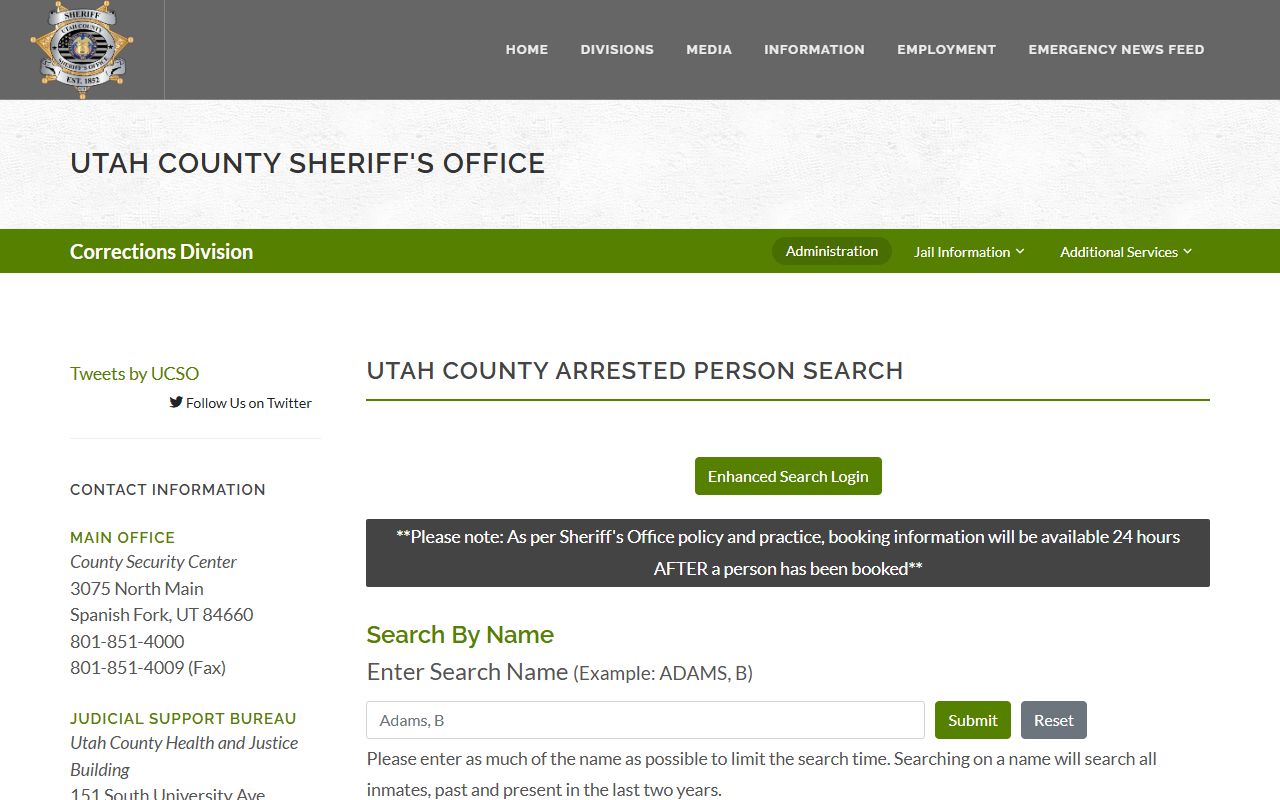
That page is useful because it lets you check custody status before you move to a written police-record request.
The Utah County corrections division is shown below because it explains the county's corrections side and where the jail record trail sits.
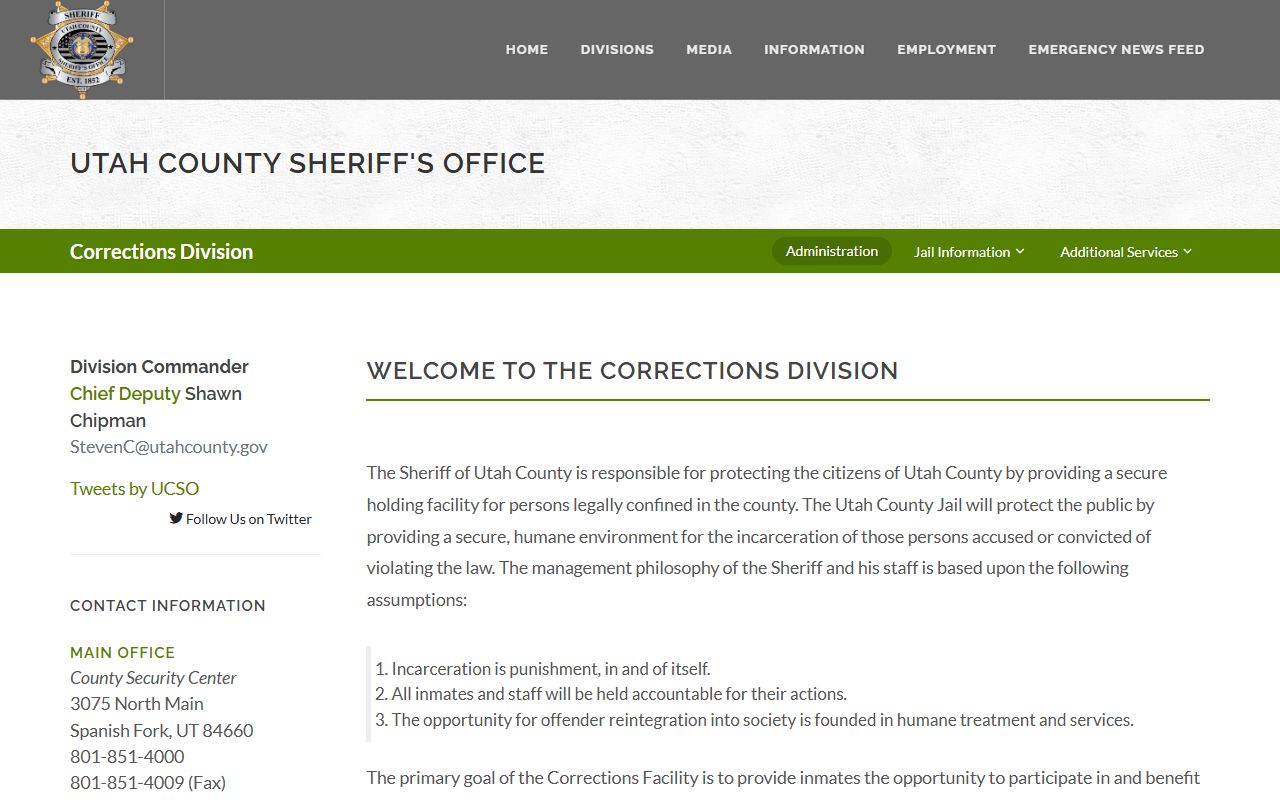
That corrections page is a good fit for Utah County because the records desk and the inmate search sit close to the county's corrections work.
| Records Division |
Utah County Sheriff's Office Records Division 3075 North Main Street Spanish Fork, UT 84660 |
|---|---|
| Phone | (801) 851-4000 |
| Inmate / Records | (801) 851-4250 |
| Warrants | (801) 851-4065 |
| Extraditions | (801) 851-4040 |
Utah County Police Records Requests
Utah County gives you several official paths for police records. The records division accepts in-person, written, and electronic requests. The county asks for a government-issued photo ID and a specific description of the record, and it says you can include a case number if you know it. That structure is useful because it lets you tailor the request to the file you actually want rather than sending a broad ask that has to be narrowed later.
The county also says standard response time is 10 business days, with 5 days for expedited requests. That is a clear public-record timeline, and it helps if you are trying to line up a report before a court date or a hearing. If your request needs to go by mail, the records division address is the same Spanish Fork location listed above. If you can go in person, the county says regular business hours apply. Either way, the records desk is the place to start.
The warrant department is also worth noting in Utah County Police Records searches because a warrant can explain why a person shows up in the jail system. The county gives direct contact numbers for warrants and extraditions, and that can help you determine whether the question is a public record, a custody issue, or a court-side matter. The county's structure keeps those paths separate but connected.
Use these details when you prepare a request:
- Full name of the person or case
- Date of birth, if known
- Case number or report number, if known
- Whether you need a record, custody check, or warrant follow-up
Note: Utah County Police Records requests are easier to route when the request names the exact office and the exact record type on the first pass.
Utah County Police Records and Inmate Search
The inmate search portal is one of the fastest ways to get oriented in Utah County Police Records. The county says you can search by first and last name or date of birth, and the results can include custody status, charges, bond amounts, and the next court date. That is a practical first look before you decide whether you need a records request or a court search. If the person is in custody, you may already have enough information to move to the next step.
Because the county is large, the jail and corrections side can be useful even when you are not sure where the file started. The sheriff's corrections page helps you understand the inmate side of the search, while the records division handles the official request. If the search starts with a warrant, the warrant department can help you understand whether the issue is active custody or a later file. That keeps the search organized.
Utah County's jail and corrections tools are not a substitute for the record itself, but they are a good way to confirm whether the record exists and whether the person is currently tied to the county system. That can save time and help you write a better request when you do need the file.
The Utah County inmate search page is shown below because it is the county's fastest public custody check.
That image is useful because it shows the portal people use first when they need a custody answer before a formal request.
Utah County Police Records and Court Files
When a Utah County arrest becomes a filed case, the court side is the next place to look. The Utah County District Court in Provo is at 125 North 100 West, with phone (801) 429-1000. That matters because a police record and a court file are related but not the same. The sheriff or jail side tells you what happened at custody or booking. The court side tells you what happened after the charge was filed.
If you are tracing a warrant or extradition matter, the court file can help you line up the record with the later case event. Utah County's records trail is easiest when you keep the sheriff, the jail, the warrant department, and the court in that order. That way you do not confuse a booking line with a docket line. They serve different jobs.
For older records or a broader county history question, Utah state tools can still help. The Utah Courts site at utcourts.gov is the best official bridge from the county record to the judicial record. The Utah State Archives at archives.utah.gov can also help if the file you need has moved out of the active county office. Those state resources do not replace the county, but they round out the trail when the case grows older.
Utah County Police Records And State Help
Utah County Police Records can also connect to statewide criminal history work. If you need to understand how the state handles sealed or cleared records, the Bureau of Criminal Identification pages at bci.utah.gov/criminal-records/ and bci.utah.gov/expungements/ are the right follow-up. If you need to check a status, the state portal at expungementstatus.utah.gov gives you the official place to look. Those pages matter when a county record has a later cleanup step or when you need to trace a file after the county has done its part.
The county record, the court file, and the state history record are related but not interchangeable. That is why Utah County's structure is useful. It gives you direct contact points at each stage. The records division handles county requests. The inmate portal gives you custody status. The warrant department handles active hold questions. The district court shows where the case ended up. Used together, they make the search manageable.
The clean order for Utah County is simple. Start with the records division if you need a document. Check the inmate search if you need custody status. Use the warrant department if the question is about holds or extradition. Move to the court if the case filed. If you need the statewide record trail, use BCI, GRAMA, or the archives. That keeps the search local first and broad only when necessary.