
Sandy City Police Records
Sandy City Police Records are routed through the city's own public records system, which is helpful when you want a clear place to submit a request and track what happens next. Sandy gives residents a portal with previous request history and responsive documents, so the process stays organized from the first submission. If you need a report, a copy, or another police file, the city records path is the official place to start. That makes it easier to see which request went where and which office is handling the response.
Sandy Police Records Quick Facts
How Sandy Police Records Work
The Sandy City records system uses NextRequest, and the city's public portal is built to help residents communicate with the city about document requests. The key difference for police records is that Sandy says those requests must be submitted to the Sandy City Police Records Division. That separation matters because the police file is not treated like a general city request. It goes to the police records staff, not just any city desk.
The portal is useful because it lets you see previous requests and responsive documents. That means you can return to the same place later and check what the city already posted. If you need to follow the request status, the portal keeps the request history in one official place. Sandy's system also gives multiple city departments access through the same platform, which helps when the police record is only one part of a broader city records search.
The Sandy City portal at cityofsandycityut.nextrequest.com is shown below because it is the main entry point for Sandy public records requests and a direct view into prior request history.
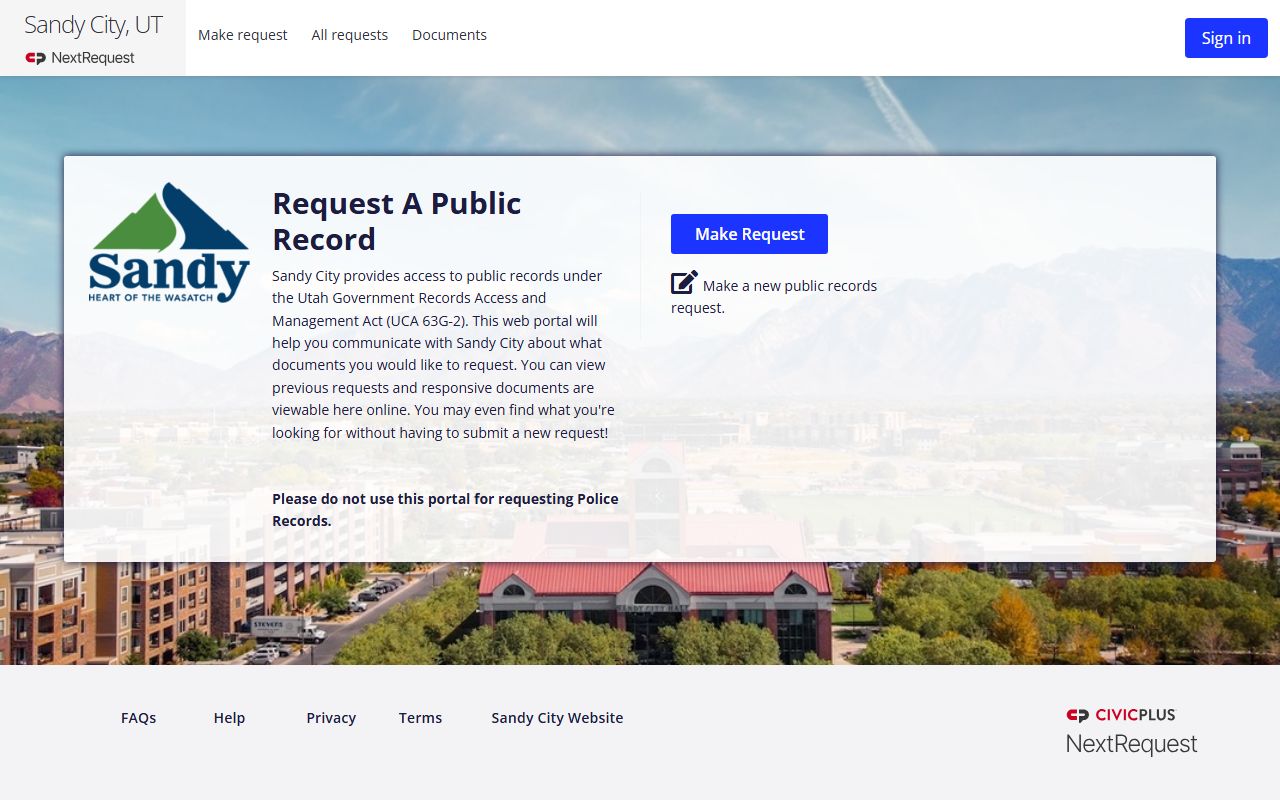
That portal is the right place to begin when you want a request record, a response record, or a simple way to keep track of the city process.
| Police records office | Sandy City Police Records Division |
|---|---|
| Email contact | PDrecords@sandy.utah.gov |
| Portal feature | Previous requests and responsive documents are available |
| Request style | Portal-based public records submission with police records routed separately |
Sandy Police Records FAQs and Staff Contact
Sandy's FAQ page makes the police records rule even clearer. It says all police records requests must be submitted to the Sandy City Police Records Division, and it gives the direct email address for questions about those records. That is valuable because it removes the guesswork about where to send a request. If the issue is police records, Sandy wants it handled by the dedicated police records staff.
The FAQ page also shows that the city treats records access as a transparent process instead of a closed one. Because the portal stores prior requests and responsive documents, you can see how a request moved through the system. That can help when you need to follow up on a prior submission or when you want to compare what the city released in response to a similar request. The FAQ page exists for that reason. It explains the route before you start typing.
The Sandy City FAQs at cityofsandycityut.nextrequest.com/faqs are shown below because they state the police-records rule directly and point to the dedicated staff who handle those requests.
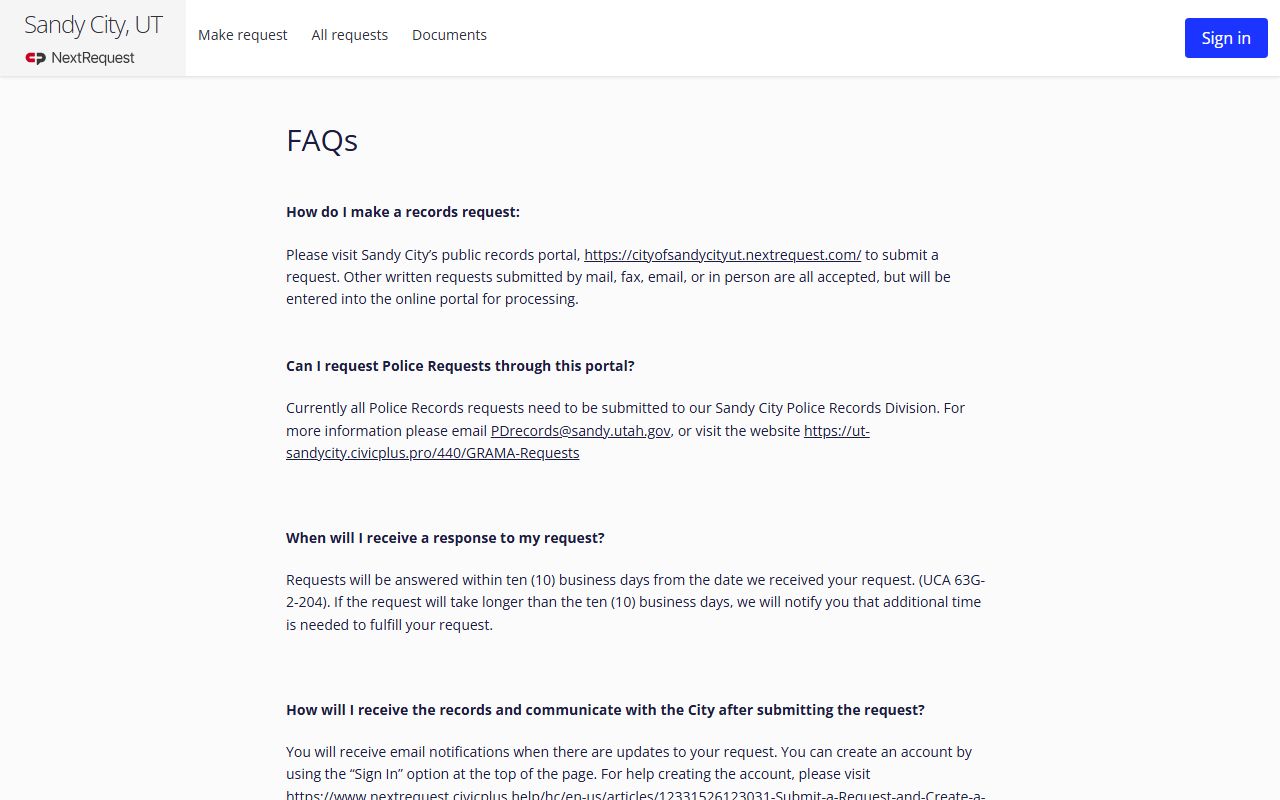
That page is the best official source when you want the city to confirm the separate police records process in plain language.
If you need to reach the office directly, the city lists PDrecords@sandy.utah.gov for police records questions. That contact is useful when you need help with a submission, a follow-up, or a record that was already posted in the portal. Sandy keeps the line simple on purpose, which helps the public stay on the records path instead of drifting across different city offices.
Sandy Police Records and Utah GRAMA
Utah GRAMA sets the access rules behind Sandy police records just as it does for other city and state files. The law at Utah Code Title 63G, Chapter 2 explains why some records are public, some are private, and some can be protected or controlled. Sandy's portal works inside that system. The city can post responsive documents, but it still has to respect record classes and redaction rules when a request reaches protected material.
That same Utah system becomes important if the Sandy request leads you beyond the city file. A police matter may move into court, fall into older archives, or become part of a state criminal history record. When that happens, the official Utah sources become the next step. The city portal is the first stop, but it is not always the final one. If a request seems to point somewhere else, the state tools help keep the search moving.
The Utah Courts site is one of the main follow-up paths. It is the right place when a Sandy police matter becomes a case file, hearing, or court-connected record. The Utah State Archives is another follow-up source when a file has aged out of the active city system. Both are official, both are useful, and both fit the public-record path Sandy users may need after they check the city portal.
When Sandy Police Records Move to State Sources
Some Sandy Police Records stay with the city. Others do not. If the record becomes part of a criminal history check, the Utah BCI criminal records page is the state resource that fits best. That page helps when the question shifts from a single city report to a broader criminal history search. It is the natural follow-up for records that need a statewide perspective rather than just a local incident copy.
If a case has been expunged or is in the process of expungement, the state expungement pages become the next stop. The BCI expungements page explains the sealing process, while the expungement status portal lets a person check the application by submission or receipt number and date of birth. That matters when the city record you expected no longer appears in the usual place and the question is whether it has been restricted by a later order.
The Sandy records portal, the FAQ page, and the state follow-up pages work together. The city handles the local request. The state handles the next layer. When you use them in that order, you avoid overcomplicating the search and stay within official sources the whole way.
Salt Lake County Police Records
Sandy is in Salt Lake County, so the county page is the right next stop when a city request overlaps with sheriff records, county jail information, or a broader county-level records search. Use the county page when the Sandy file is only one part of the larger record trail.
Nearby Utah Cities
Nearby city pages can help if the police event happened just outside Sandy or if another department created the file.