
St. George Police Records
St. George police records run through the city's records division page and the police department's GRAMA FAQs. If you need a report, a copy, or a status update tied to a St. George police matter, the official pages explain who can ask, how long the city has to respond, and when a record may still be limited because a case is open. That gives you a clear local path for St. George police records without guessing which office is responsible for the request.
St. George Police Records Quick Facts
How to Request St. George Police Records
The official starting point is the St. George Police Department records division page. That page explains the GRAMA history, points you to the records department, and gives the city's response timing rules. It also tells you that records may be delivered by email and that some cases may not be available right away because of case status.
That timing matters. The city says it has ten business days to provide the record, deny the request, or send a delay notice. If you are waiting on a St. George police record, the records department is the place to follow up, and the official page gives the records desk phone number at 435-627-4301. That is the number to use when you want the city's own records staff instead of a general information desk.
Requests are still governed by GRAMA, so the city is not just looking at what you want. It is also looking at the record type and whether the file is public, private, controlled, or protected. If the case is open or the record falls into one of the limited categories, the city may release part of the record instead of all of it. That is normal for St. George police records and helps explain why some requests move faster than others.
| Official records page | Records Division |
|---|---|
| GRAMA FAQ page | Police GRAMA FAQs |
| Follow-up phone | 435-627-4301 |
| Common delivery method | Email delivery when the record is ready |
St. George Police Records and the Records Division
The records division page is the main St. George source for police records. It says GRAMA was enacted in 1991 under Title 63G, Chapter 2 of the Utah Code, and it gives the city a direct route for handling requests. That is useful when you need a real city record rather than a broad internet search. It also helps you understand why St. George may ask about the case status before it releases a report.
The city records division page at sgcityutah.gov/departments/police_department/records_division.php is shown below because it is the exact St. George records page that explains timing, delivery, and the local records workflow.
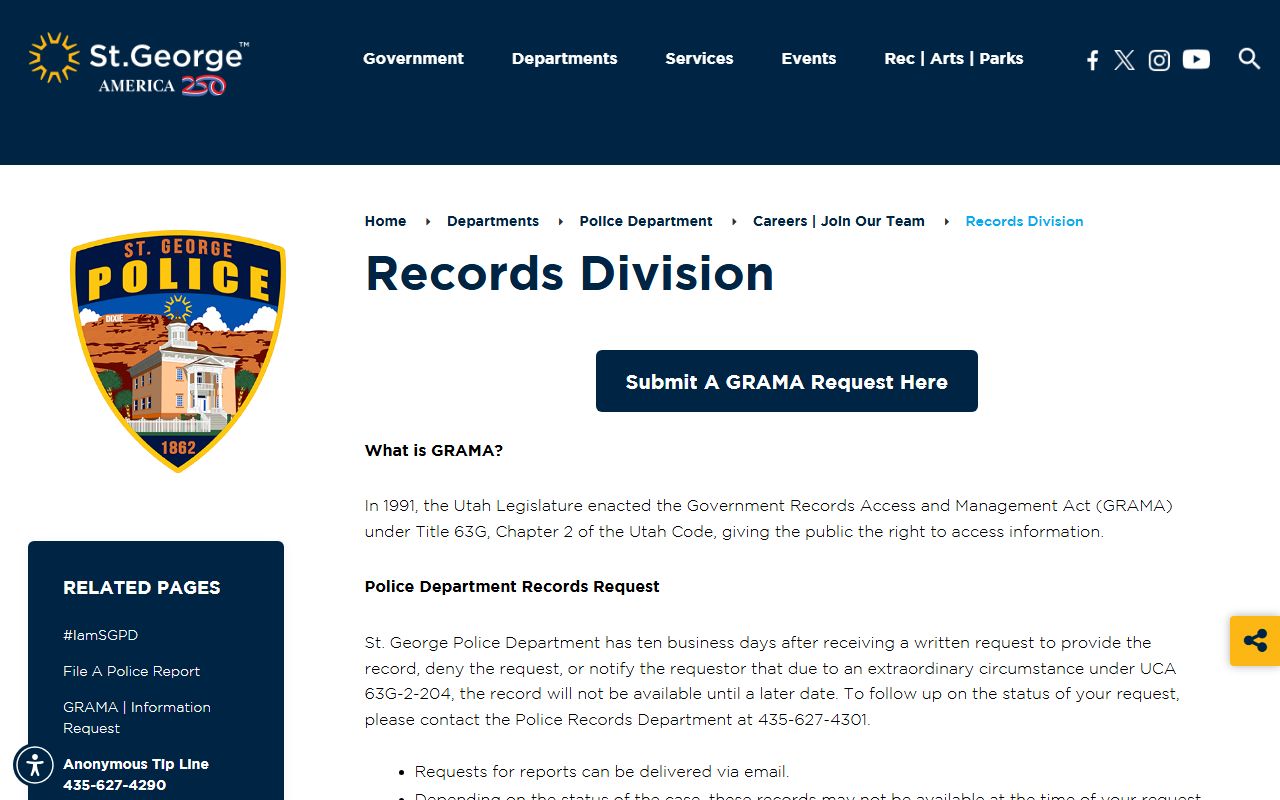
That local page is the best first stop when you need a report, want the records desk contact information, or need to confirm what the city says about release timing.
The city's records division page also says that case status can affect what you get. That matters because an open investigation or a recent incident can still be protected or partly protected. In plain terms, a request for St. George police records may be answered in stages. You might receive one document right away and another only after the case moves forward.
The city FAQ page at cityofstgeorgepoliceut.nextrequest.com/faqs is shown next because it is where St. George explains classifications, fee waivers, and who may receive a non-public record.
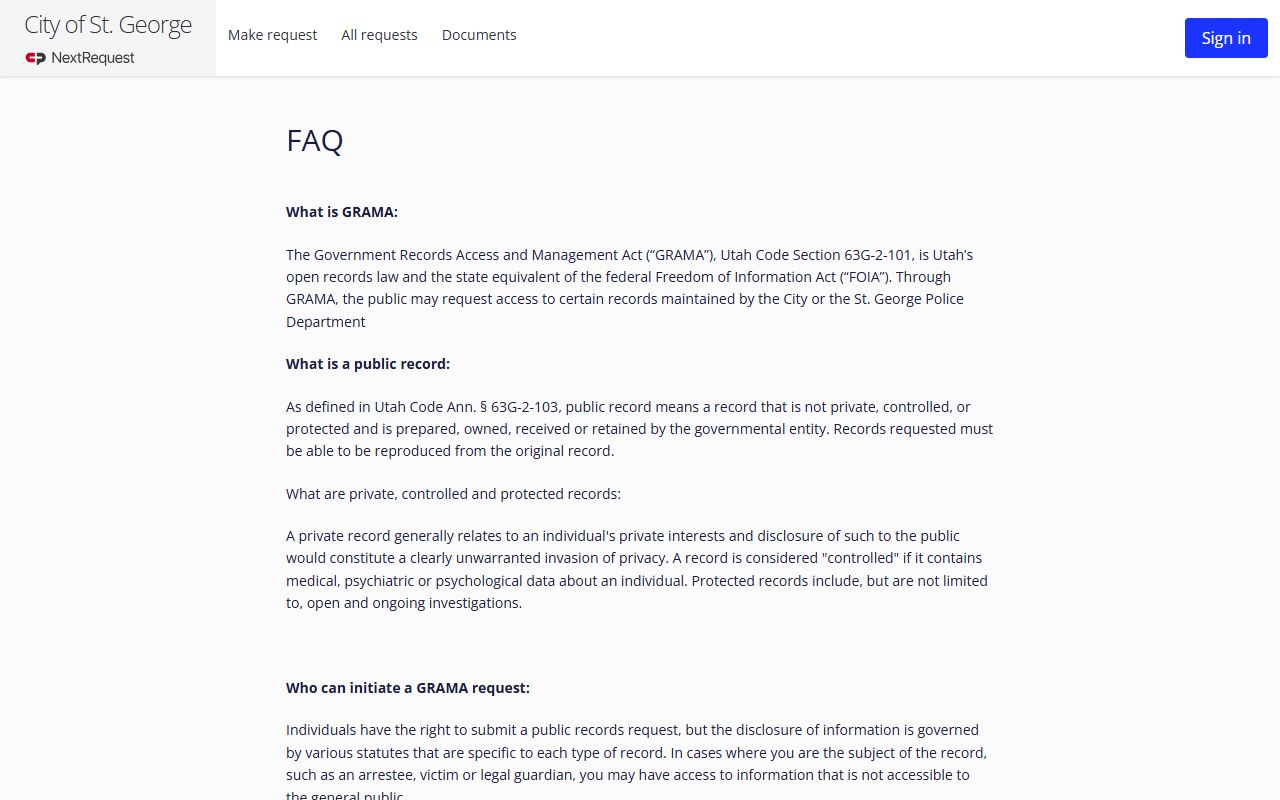
That local FAQ page is useful when you need the city’s own explanation of public, private, controlled, and protected records before you send a broader request.
St. George Police Records Fees and Timing
St. George is one of the more specific Utah cities when it comes to fee detail. The records division page says the first 15 minutes are free, then staff time is billed at $18.82 per hour for preparation, review, and redaction. B/W copies are $0.25 per page, color copies are $0.50 per page, photos are $5.00 for each CD, and dispatch audio is $47.43 per hour. Body cam time on the FAQ page is also listed at $18.82 per hour.
Those rates matter because they show how the city handles real labor, not just the paper copy. A short report may be easy. A longer file with images or audio can take more time, and the fee can follow that work. If a request involves a lot of redaction, the staff time line is the part most people notice first. That is why St. George police records requests work best when the request is very specific.
The FAQ page also notes fee-waiver situations. The city says a waiver may be available when the release benefits the public rather than the individual, when a media request is presumed to serve the public, when the requester is the subject of the record, or when the requester is impecunious. That is a useful detail because it gives St. George a clear path for people who need the record but cannot easily cover the full cost.
If you expect a larger request, keep an eye on the timing and the fee notice. The city can respond within ten business days, but that response might be a full release, a partial release, a denial, or a delay notice. The point is to keep the request on the official track and make the wording specific enough that the records staff can tell what you need without extra back-and-forth.
St. George Police Records FAQs and Access Rules
The city's NextRequest FAQ page is where St. George gets more precise about how police records are classified. It says a public record is one that is not private, controlled, or protected and is prepared, owned, received, or retained by the government. Private records relate to an individual's private interests. Controlled records can contain medical, psychiatric, or psychological data. Protected records include open and ongoing investigations.
That classification matters more than most people expect. A request can be valid and still not produce the whole file if the record is partly protected. St. George also says an arrestee, a victim, or a legal guardian may have access to some non-public information. That is the kind of detail that helps you tell whether you should ask for the full file, a copy of a report, or only the part of the record the city can legally release.
The FAQ page is also useful because it confirms that the city accepts electronic GRAMA or FOIA-style requests through NextRequest. You do not have to guess whether the city wants paper only. The online route is supported, and the city still applies the same record-classification rules before it sends anything back. That gives you a faster entry point without changing the legal review behind the request.
More St. George Police Records Resources
If you are trying to decide where a St. George request should start, the safest answer is still the official city pages. The records division page tells you about timing and fees. The FAQ page tells you how the city reads GRAMA categories and subject access. The Utah GRAMA page gives you the statewide rule. Put those together and you have the full public-records path for St. George police records.
| Records Division | Main city page for St. George police records requests |
|---|---|
| GRAMA FAQs | Definitions, fee-waiver notes, and subject access guidance |
| Utah GRAMA | Official statewide records law for public access |
| Utah State Courts | Useful when a police matter also involves a court case |
When a record request involves a recent arrest, an active case, or a report that may still be under review, expect a more careful release. That does not mean the city is ignoring the request. It usually means the records division is checking the file against the law before it sends anything out. For St. George police records, that caution is part of the normal process.
Washington County Police Records
St. George sits in Washington County, so the county page is the right next stop when you want the county-wide picture and related sheriff resources. Use the county page below for broader Washington County police records context.
Nearby Utah Cities
Use these links if you need a nearby city page instead of the St. George page.